
August 2026 Situational Awareness Technical Brief | MW42
Updated: 3 days ago
This August 2026 situational awareness brief covers the latest four weeks of disaster, trade, food, geopolitical, and space-weather changes.
Reporting period: August 1-28, 2026
Overall watch: High
Confidence: Moderate-High
Evidence cutoff: August 28, 2026
This public brief uses evidence published or materially updated during the last four weeks. Earlier Mad World 42 briefs are used only to establish the prior baseline: Elevated in May and High in June.
August at a Glance
The August watch remains High. The overall level has not changed since June, but the

pressure mix has. A catastrophic flood struck the Nepal-Tibet border corridor; major earthquakes caused severe localized disruption in Colombia and Indonesia; and wildfire activity placed heavy demands on response systems in the United States while fires and drought remained active in Europe. Canada continued to face evacuations and smoke impacts even though its national fire activity remained below its five-year average.
Economic pressure also broadened. Canada and the United States entered a sharper tariff dispute in late August, USDA raised its outlook for foreign beef imports as domestic cattle supplies tightened, and maritime disruption continued to affect fuel, fertilizer, freight, and food costs. High-level contacts in Moscow are worth monitoring, but they do not yet show durable de-escalation. A short-term NOAA G2 geomagnetic-storm watch raised the space-weather posture for the end of the reporting window.
Global systems — High, unchanged. Severe disasters now overlap with maritime, fertilizer, energy, and food-security pressure.
Western Hemisphere — High, increased. Colombia's magnitude 7.4 earthquake and continuing Canadian fire impacts raised the regional load.
United States — High, unchanged. Wildfire response demand, trade uncertainty, energy costs, and tight cattle supplies are the main household-facing channels.
Space weather — Elevated, increased. NOAA expected G2 geomagnetic conditions on August 28.
What Changed Since June
Disaster load increased. The Nepal-Tibet flood, Colombia earthquake, Indonesia earthquake and tsunami, and concurrent wildfire response now dominate the immediate watch.
North American trade pressure increased. New U.S. tariffs on Canadian goods took
effect on August 22. Canada suspended negotiations and announced matching countermeasures scheduled for September 8.
Food-supply pressure changed shape. USDA's August cattle outlook described tighter domestic supplies, slower expected slaughter, and an upward revision to beef-import forecasts.
Maritime and input-cost pressure remains high. Late-August UN reporting described near-stalled Hormuz transit alongside higher oil and container-shipping costs.
Household affordability remains elevated but mixed. Grocery prices eased slightly month to month, while energy, gasoline, and revolving-credit pressures remained material.
Space weather increased from Guarded to Elevated for the short forecast window.
Diplomacy is a monitoring signal, not a status improvement. The confirmed Moscow visits created communication channels but did not establish a ceasefire or settlement.
Disasters Shaping the Watch
Nepal-Tibet Flood
On August 26, a high-altitude ice-rock collapse generated a debris flow and flood through the Bhote Koshi and Trishuli system and into the Gyirong border area. By August 28, the Associated Press reported 579 deaths and 1,924 people missing in Nepal, with five deaths and 558 people missing on the Tibetan side. Those figures were still changing at the evidence cutoff.
USGS described a nearly 100-kilometer impact path. Chinese geologic authorities described a cascading collapse, debris-flow, and mudflow sequence. Roads, bridges, settlements, hydropower assets, and the border corridor were damaged or cut off, while unstable slopes and a barrier lake kept secondary flooding and rescue-access risk active.
Watch next: Missing-person updates, barrier-lake monitoring, rainfall over unstable slopes, road and power restoration, and downstream evacuation conditions.
Sources: Associated Press, August 28, USGS hazard summary, August 27, and China Geological Survey, August 28.
Colombia Earthquake
A magnitude 7.4 earthquake struck western Colombia on August 10. Colombian and UN reporting documented deaths, injuries, damaged housing, interrupted health services, and response operations across multiple departments. The Colombian Geological Service described it as the country's largest recorded earthquake of the twenty-first century.
The immediate concern is no longer only search and rescue. Shelter, health care, water, road access, structural assessment, and long-term service restoration remain active recovery issues.
Watch next: Official casualty updates, housing and health-facility assessments, aftershocks, rural access, and restoration of water and roads.
Sources: Colombian Geological Service, August 10, UN response update, August 11, and GDACS event record.
Indonesia Earthquake and Tsunami
A magnitude 7.7 earthquake struck the Flores region on August 14 UTC and generated a locally measured tsunami. Indonesian authorities reported deaths, damaged buildings, disrupted roads and communications, displacement, and thousands of aftershocks during the following days.
The tsunami warning ended, but aftershock, landslide, remote-island access, shelter, and communications risks remained operational concerns.
Watch next: Official impact totals, aftershock intensity, island access, road clearance, shelter needs, and restoration of power and communications.
Sources: GDACS event record, Indonesia BNPB, August 19, and Indonesia BMKG, August 19.
Wildfires in the United States, Europe, and Canada
NIFC reported 93 active large fires and 22,356 assigned personnel on August 26. Year-to-
date U.S. fire counts were 127 percent of the ten-year average, while acreage burned was 165 percent of the ten-year average. The important signal is not only acres burned; it is the combined demand for crews, aircraft, evacuation support, road management, smoke response, and public information.

Europe also saw repeated August wildfire activations amid prolonged heat and drought, including an 11,606-hectare fire in Serbia. Canada reported ongoing evacuations and smoke impacts but said national activity remained below the five-year average. The regional picture is therefore serious but not uniform.
Watch next: National preparedness levels, new large-fire starts, dry thunderstorms, wind and humidity, smoke corridors, evacuations, and cross-border resource requests.
Sources: NIFC National Fire News, August 26, Copernicus climate update, August 12, GDACS Serbia fire, and Public Safety Canada, August update.
Trade, Food, and Household Pressure
Canada-U.S. Tariff Escalation
The North American trade picture worsened in the final week of August. According to Canada's Department of Finance, the United States imposed 50 percent tariffs on $27.6 billion of Canadian goods effective August 22. Canada suspended negotiations rather than accept the latest terms and announced dollar-for-dollar counter-tariffs scheduled to take effect September 8.
Canada's announced response covers steel, aluminum, dairy, appliances, agricultural equipment, pulp and paper, plastics, and electronics, with rates of 15, 25, or 50 percent depending on the product. Existing auto countermeasures also remain in place. The immediate risk is not an across-the-board shortage. It is higher uncertainty and cost exposure for manufacturers, farms, transportation firms, construction supply chains, and households that depend on cross-border products or employment.
Watch next: Any reopening of negotiations, exemptions or remissions, retaliation before September 8, manufacturing slowdowns, transport delays, and price transmission into equipment, food, housing repair, and vehicle costs.
Sources: Department of Finance Canada, August 25, Canadian tariff list updated August 26, and USTR statement on the U.S. action.
More Foreign Beef in the U.S. Supply Outlook
USDA's August 19 cattle and beef outlook reported tighter calf supplies heading into late 2026 and early 2027, a slower expected pace of slaughter, and lower domestic production than the prior month's forecast. USDA revised beef-import forecasts upward for both 2026 and 2027.
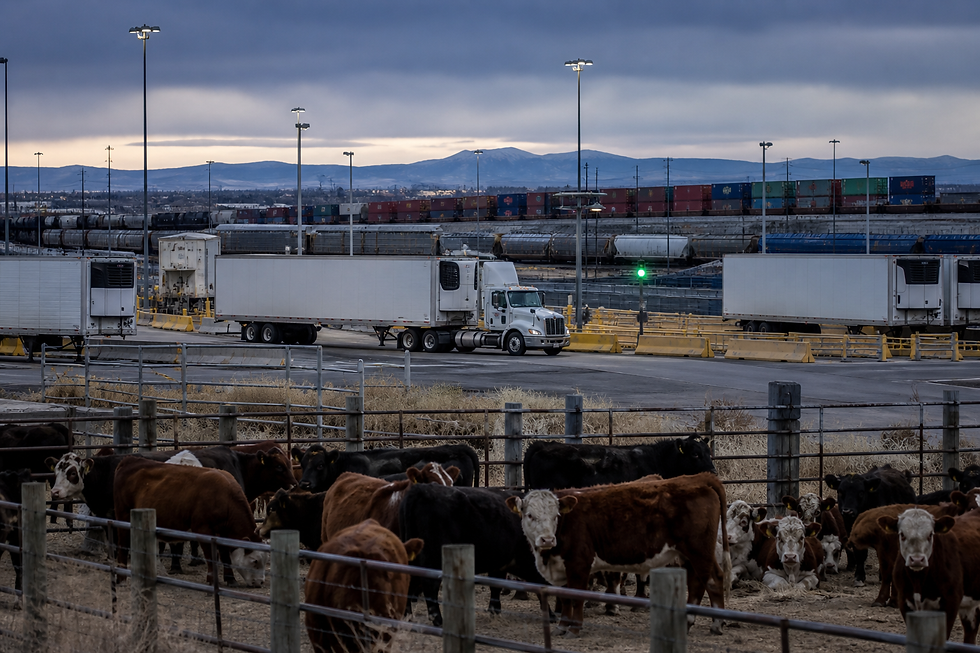
That means foreign beef is becoming a larger part of the supply response to tight U.S. cattle conditions. USDA's current trade data tracks beef and veal imports by partner country and was updated during August. Increased imports can help supply processors and retailers, but they do not guarantee lower shelf prices because cattle availability, processing capacity, freight, tariffs, product mix, and consumer demand all affect the final price.
Watch next: September trade data, import volumes by country, domestic slaughter, cattle prices, retail beef prices, port and cold-chain throughput, and any new animal-health restrictions.
Sources: USDA Economic Research Service cattle and beef outlook, August 19 and USDA livestock and meat trade data, updated August 17.
Maritime, Fertilizer, and Freight Costs
On August 24, the UN Secretary-General said Hormuz transit was near a standstill, oil prices were about 33 percent higher than at the start of the conflict, and global container rates were 84 percent higher than a year earlier. The same statement linked disruption in Hormuz, the Red Sea, and Black Sea shipping to energy, fertilizer, and food-system pressure.
This confirms the transmission channel identified in June: conflict and maritime disruption are moving through fuel, insurance, fertilizer, freight, and food costs. Exposure is uneven and does not prove immediate retail scarcity in the United States.
Watch next: Tanker transit, attacks on civilian shipping, container rates, fertilizer export volumes, fuel prices, and restoration of navigational access.
Food-Security Outlook
The World Food Programme's August 5 analysis projected that the strengthening 2026-27 El Nino could push at least 49 million additional people into acute food insecurity by the end of 2027 across 45 already food-insecure countries. That is a forecast, not an observed August impact count.
The risk overlaps with conflict, fertilizer and energy costs, trade barriers, and humanitarian funding strain. The medium-term food watch is therefore high even though impacts will differ sharply by country and crop calendar.
Source: World Food Programme, August 5.
U.S. Household Financial Buffer
July food-at-home prices eased 0.1 percent month to month but remained 2.7 percent higher than a year earlier. Energy prices were 14.7 percent higher year over year, and gasoline was 24.6 percent higher. New York Fed data showed total household debt edging down to $18.8 trillion and aggregate delinquency improving slightly, while credit-card and auto-loan balances increased.
This is a mixed signal. Grocery inflation and aggregate delinquency do not justify another escalation, but energy and revolving-credit pressure reduce some households' ability to absorb evacuation, temporary lodging, repair, medical, or outage costs.
Sources: BLS July CPI, released August 12, USDA Food Price Outlook, August 25, and New York Fed household debt data.
Diplomacy and Strategic Signals
CIA Director John Ratcliffe held talks in Moscow on August 25, the highest-level Trump administration visit reported since January. Separately, Archbishop Paul Gallagher—the Holy See's Secretary for Relations with States and International Organizations—met Russian Foreign Minister Sergey Lavrov and other officials during an August 24-28 visit focused on dialogue and humanitarian initiatives.
These are communication and access signals. They do not establish a ceasefire, settlement, or reduced risk from the Russia-Ukraine war. The two visits should not be conflated, and neither supports lowering the current watch.
Watch next: Announced follow-on talks, verifiable humanitarian agreements, changes in attacks on civilian or commercial infrastructure, and negotiations accepted by the parties.
Space-Weather Watch
NOAA's August 26 forecast expected G2 geomagnetic conditions on August 28 following solar activity and possible coronal mass ejection effects. G2 conditions can produce limited high-latitude power-system and radio effects and justify additional GNSS, HF radio, satellite, and grid monitoring. They do not imply widespread failure.
Watch next: Observed Kp, upgraded or canceled SWPC alerts, GNSS or HF-radio degradation reports, and stronger Earth-directed activity.
Where Pressure Could Compound
Access and response capacity. Floods, earthquakes, and fires can simultaneously restrict roads, damage communications, displace households, and strain specialized crews and logistics.
Cross-border trade and production. Canada-U.S. tariffs can affect steel, equipment, dairy, paper, electronics, and vehicle supply chains at the same time that freight and energy costs remain elevated.
Food inputs and protein supply. Fertilizer, fuel, weather, cattle availability, processing capacity, and imported beef volumes now overlap as separate price and continuity variables.
Household financial buffers. High energy and gasoline prices can reduce money available for evacuation, temporary lodging, medication, repairs, and replacement supplies.
Communications and navigation. Earthquakes and floods disrupted access and communications in affected regions. The short G2 space-weather watch adds a separate, limited monitoring need for GNSS and HF radio reliability.
What Would Raise or Lower the Watch
Conditions That Would Raise Concern
Failure of the Himalayan barrier lake or additional debris-flow activity.
Prolonged road, power, communications, or hydropower outages in disaster zones.
New large-fire starts, broader smoke corridors, or shortages of response resources.
Additional Canada-U.S. tariff escalation or visible price and employment effects.
Sustained near-stall in Hormuz transit, attacks on shipping, or further increases in fertilizer and freight costs.
Crop-loss evidence or expanded WFP and FAO anticipatory-action triggers.
G3 or stronger geomagnetic forecasts or verified GNSS, radio, satellite, or grid effects.
Breakdown of diplomatic contacts accompanied by increased attacks on civilian or commercial infrastructure.
Conditions That Would Support Stabilization
Verified stabilization of Himalayan barrier lakes and restored road access.
Fewer new large fires, improving containment, and reduced national response demand.
Reopened Canada-U.S. negotiations or specific tariff relief that reduces cost exposure.
Restored maritime traffic and lower oil, fertilizer, and freight costs.
Stable or improving food-price, retail beef, and household-delinquency data.
Expiration of the G2 watch without operational effects.
Concrete and verifiable humanitarian agreements resulting from Moscow contacts.
Preparedness Implications
Keep evacuation and alternate routes current. Maintain vehicle fuel, offline directions, and paper contacts before fire or flood warnings.
Treat smoke as both a health and mobility problem. Maintain fitted respirators, indoor-air filtration, medication, and a clear relocation trigger.
Maintain a practical household buffer for food, water, power, communications, and essential medication. Rotate supplies rather than overbuying.
Watch trade and food costs without reacting to a single headline. Track household staples, fuel, critical repair materials, and protein prices over time.
Reduce payment and communication single points of failure. Keep more than one payment method and at least one offline information path.
During space-weather watches, verify GNSS-dependent plans and retain non-GNSS navigation and communications options where practical.
Use official incident and warning sources before acting on changing casualty counts, barrier-lake claims, trade rumors, or reports of additional disasters.


Comments